


Ultrasonic Cleaning 101

Ultrasonic Cleaning 101: How It Works & How Omegasonics Builds Its Systems
Ultrasonic cleaning uses high-frequency sound waves to remove contaminants from surfaces, including difficult-to-reach areas that traditional cleaning methods may miss. Learn how the technology works and explore the four major stages behind the construction of an Omegasonics ultrasonic cleaner.
What Is Ultrasonic Cleaning?
Ultrasonic cleaning is a process that uses high-frequency sound waves transmitted through a liquid cleaning solution. These sound waves create alternating high- and low-pressure cycles, producing a phenomenon called acoustic cavitation.
During cavitation, microscopic bubbles form, grow, and rapidly collapse in the liquid. This action helps loosen and remove dirt, oils, grease, soot, and other contaminants from submerged surfaces.
Unlike brushing or manual scrubbing, ultrasonic cleaning can reach intricate geometries, small openings, crevices, and complex components when the cleaning solution can properly contact those areas.
How Ultrasonic Cavitation Works
High-Frequency Sound
The ultrasonic generator delivers an electrical signal to the transducers, causing them to vibrate and transmit sound energy into the cleaning liquid.
Microscopic Bubbles
Pressure changes in the liquid produce microscopic cavitation bubbles that form and collapse throughout the active cleaning area.
Contaminant Removal
Cavitation creates localized forces and fluid movement that help separate soils and residues from component surfaces.
Consistent Processing
With the correct chemistry, temperature, cycle time, and equipment settings, ultrasonic cleaning can provide repeatable cleaning performance.
Ultrasonic Cleaning Is More Than Just Sound Waves
Successful ultrasonic cleaning requires the right combination of equipment, cleaning chemistry, water quality, temperature, ultrasonic power, frequency, cleaning time, and proper part positioning.
Understanding these factors helps operators improve results while protecting delicate materials and components.
Omegasonics in 4 Steps
A quality ultrasonic cleaning system depends on much more than the stainless-steel tank. From transducer design and generator construction to equipment assembly and shipping, each stage contributes to the finished system.
Step 1: Transducer Construction
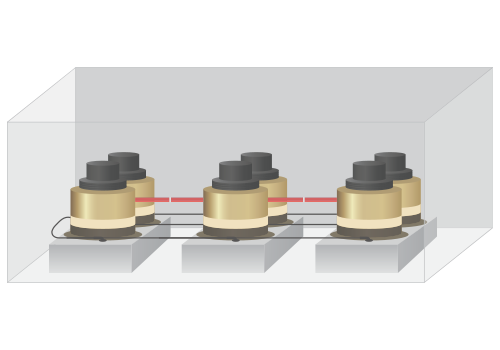
Transducers are responsible for converting electrical energy into mechanical vibrations. These vibrations transfer ultrasonic energy into the cleaning liquid, producing the pressure waves required for cavitation.
A useful comparison is a stereo speaker. Both convert electrical signals into mechanical movement, although ultrasonic transducers operate at much higher frequencies and use a different construction method.
What Makes Omegasonics Transducers Different?
Omegasonics places special attention on piezoelectric ceramic components, commonly called PZT elements, which are used in its ultrasonic transducers.
- Piezoelectric elements undergo a controlled conditioning and aging process.
- Elements are measured and grouped to maintain consistent electrical characteristics.
- Transducer stacks are assembled using controlled mechanical fastening procedures.
- Consistent construction helps support reliable ultrasonic performance.
Omegasonics has described its manufacturing process as including a minimum three-month controlled aging period and grouping PZT elements within a 2% capacitance range. These procedures are intended to promote consistency between transducer assemblies.
Step 2: Ultrasonic Generator Construction
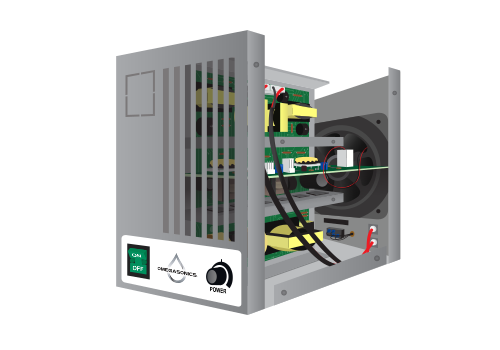
The ultrasonic generator supplies the electrical signal that drives the transducers. It controls the operating frequency and delivers the energy needed to create ultrasonic activity in the cleaning tank.
Think of the generator as the amplifier or receiver in a sound system. The generator controls the signal while the transducers convert that signal into mechanical vibration.
Why Frequency Sweep Matters
Some ultrasonic generators use frequency sweep technology, which varies the operating frequency within a controlled range.
Sweeping helps reduce persistent standing-wave patterns and can improve the distribution of ultrasonic energy within the tank. This supports more consistent cleaning across the usable cleaning area.
Omegasonics Generator Manufacturing
- Precision assembly of electronic components and circuit boards.
- Digital control of ultrasonic frequency and sweep functions.
- Inspection of electrical connections and finished assemblies.
- Performance testing before installation into the cleaning system.
Omegasonics has described its generator manufacturing process as including U.S.-based assembly and a minimum one-hour full-load test of completed assemblies.
Step 3: Machine Assembly & Testing
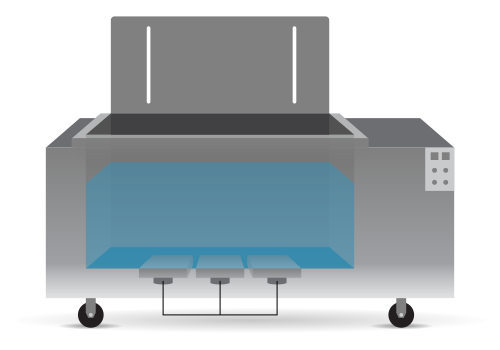
Once the primary components are ready, the ultrasonic cleaning system moves into final assembly.
Depending on the machine model, assembly may include the stainless-steel tank, ultrasonic transducers, heating elements, insulation, electrical controls, plumbing, filtration equipment, pumps, and liquid-level sensors.
How the Equipment Comes Together
- Heating elements and insulation are installed where applicable.
- The tank is integrated into the equipment frame or housing.
- Ultrasonic transducers and generators are installed and connected.
- Electrical panels, controls, pumps, filtration, and plumbing are assembled according to the machine configuration.
- The completed machine is filled and checked for leaks and operation.
Quality Control Before Shipping
Omegasonics has described a final testing process that includes an extended 18-hour operational test to verify equipment operation and check for leaks.
Quality-control inspections throughout the manufacturing process help ensure components are installed correctly and the system operates as intended.
Step 4: Packaging & Shipping
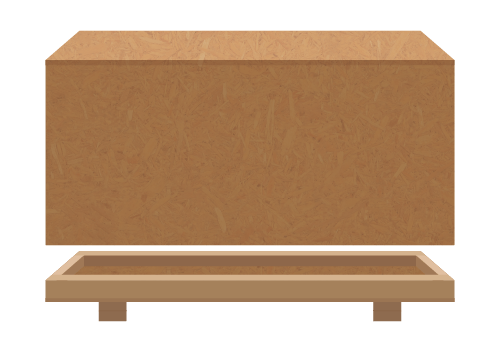
After final testing and inspection, the ultrasonic cleaning system is prepared for freight transportation.
The machine is drained, dried, inspected, and secured before being placed on a shipping base or pallet.
Protecting Equipment During Transport
- Equipment panels and internal components are secured.
- Protective wrapping helps prevent cosmetic damage.
- Equipment is secured to a sturdy pallet or base.
- Support risers can help protect wheels and casters from impact.
- A protective shipping crate helps reduce the risk of transportation damage.
Special attention is given to protecting sensitive electrical components, ultrasonic generators, and the equipment frame during shipping.
Proper packaging helps ensure the machine arrives ready for installation, setup, and operation.
Where Is Ultrasonic Cleaning Used?
Ultrasonic cleaning is used across many industries where removing contamination, improving process consistency, or cleaning complex components is important.
Industrial Manufacturing
Cleaning machined parts, metal components, oils, lubricants, and manufacturing residues.
Aerospace & MRO
Precision cleaning of compatible aircraft components and maintenance-related parts.
Contents Restoration
Cleaning appropriate household contents affected by fire, smoke, soot, and other contamination.
Electronics Restoration
Cleaning compatible electronic components using controlled processes, appropriate chemistry, and proper drying procedures.
Fire Service Equipment
Cleaning compatible firefighting tools and equipment, following applicable manufacturer care instructions.
Precision Parts Cleaning
Reaching complex geometries, small openings, and difficult-to-access surfaces on suitable components.
Frequently Asked Questions
How does an ultrasonic cleaner remove dirt?
Ultrasonic cleaners use high-frequency pressure waves to create cavitation in a liquid bath. The formation and collapse of microscopic bubbles helps loosen contamination from submerged surfaces.
Does ultrasonic cleaning work with plain water?
Plain water can transmit ultrasonic energy, but appropriate cleaning chemistry often improves contaminant removal. The correct solution depends on the material being cleaned and the type of contamination.
Why does ultrasonic cleaning temperature matter?
Temperature influences cleaning chemistry, soil removal, cavitation behavior, and material compatibility. The correct temperature depends on the application. Excessive heat can damage sensitive items.
Can ultrasonic cleaning damage parts?
Some materials, coatings, assemblies, and delicate components can be damaged by unsuitable ultrasonic settings or chemistry. Always confirm material compatibility and use an appropriate cleaning procedure.
What is the difference between a generator and a transducer?
The generator supplies the electrical signal. The transducer converts that electrical signal into mechanical vibration, producing ultrasonic sound energy in the cleaning liquid.
Ready to Improve Your Cleaning Process?
Whether you’re cleaning industrial parts, restoring fire-damaged contents, or evaluating ultrasonic cleaning for a new application, Omegasonics can help you explore the right equipment and cleaning process for your needs.
Contact Omegasonics Explore Ultrasonic Cleaners